
DEVELOPMENT POLITICAL PARTIES IN NIGERIA
INTRODUCTION
Political party, a group of persons organized to acquire and exercise political power. Political parties originated in their modern form in Europe and the United States in the 19th century, along with the electoral and parliamentary systems, whose development reflects the evolution of parties. The term party has since come to be applied to all organized groups seeking political power, whether by democratic elections or by revolution.
- The 20th century saw the spread of political parties throughout the entire world. In developing countries, large modern political parties have sometimes been based on traditional relationships, such as ethnic, tribal, or religious affiliations. Moreover, many political parties in developing countries are partly political, partly military. Certain socialist and communist parties in Europe earlier experienced the same tendencies. Source{Encyclopedia Britannica}
- FOR THE PURPOSE OF THIS LESSON, WE WILL BE LOOKING AT THE MEANING OF POLITICAL PARTY AND PARTY DEVELOPMENT.
Edmund Burke (1770) as cited by Paul Langford (1981:312), who defines a party as “a body of men united for promoting by their joint endeavours the national interest upon some particular principle in which they all agreed”
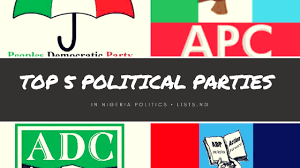
Political Party Development
The term political party development is defined as the process through which a political party originates, evolves into an organized structure and becomes either more or less electorally accountable. It is important to note that in practice this is a non- linear, multi-dimensional process.
FEATURES OF NIGERIAN POLITICAL PARTIES
Political parties in Nigeria display certain key features, which include:
- Their emergence and evolution has been closely tied to Nigerian constitutional development or evolution of Nigerian constitution. For example, it was the Clifford constitution of 1922 provision of four elective seats for Nigerians in the legislative council that stimulated the formation of the Nigerian National Democratic Party of Herbert Marcaulay.
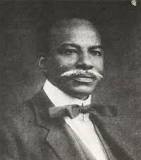
- Similarly, political party formation enjoyed a boost from the Richard’s constitution of 1944 provision of regional assemblies while retaining the four elective seats to legislative council. Similarly, the Macpherson constitution’s regional assemblies and regional executive councils and system of indirect elections to Nigerian legislative Houses in 1951 strengthened political parties activities in pre-independent Nigeria.
- Most parties have ethnic and regional bases or display identity orientations. For example, the Action Group (AG), the Unity Party of Nigeria (UPN) the Alliance for Democracy (AD) and the Action Congress (AC) had/have their basis in the Yoruba dominated South-West of Nigeria. Similarly, the National Council of Nigeria Citizens (NCNC), the Nigerian Peoples Party (NPP) and the All Progressive Grand Alliance (APGA) had/have their political strong-hold in Igbo land while the Northern People’s Congress (NPC), the National Party of Nigeria (NPN) and All Nigerian Peoples Party (ANPP) had/have theirs in the Hausa-Fulani heartland of northern Nigeria.
- Only a few of the political parties in Nigeria can boast of having a national spread.
- Political parties in Nigeria have been prone to serious inter-party conflicts, divisions, splitting and decamping (Agarah, 2004; Adejumobi, 2007).
In discussing the history and evolution of political parties in Nigeria, Ujo (2000) classified political parties into four generations. (Cited in Saliu & Muhammad 2008).
- The first generation of political parties according to him consists of the pre 1945 parties. These included the Nigeria National Democratic Party (NNDP) and the Nigeria Youth Movement (NYM) formed in 1923 and 1936 respectively. These parties were localised in their base and their interest covered very narrow and specific policies of the colonial government. This perhaps explains the limited cases of ethnic and tribal politics in this era. While Herbert Macaulay led NNDP won, all seats in the legislative council as a result of the introduction of elective principle by the Clifford constitution of 1922, it was not until 1938 that it was successfully challenged by the NYM.
- The second generation consisted of those parties that emerged between 1945 and the end of the first republic. This group, according to this classification was the National Council of Nigeria Citizen, (NCNC) the Northern People Congress (NPC), the Action Group (AG), the United Middle Belt Congress (UMBC) and the Northern Element Progressive Union (NEPU). These parties’ major preoccupation was to wrest power from the colonialist, a feat they eventually accomplished. One major flaw that characterised these political parties was their formation pattern and subsequent degeneration into ethnic-based parties and the personalisation of their operations by founders. The cultural influence in the formation of these parties undoubtedly played a significant role in this regard. For instance the Action Group party (AG) which emerged as a response to the growing popularity of the (NCNC) in the western region is traced to the pan Yoruba socio-cultural organisation, the ‘Egbe Omo Oduduwa’ (the gathering of the descendants of Oduduwa). After series of meetings and preparation, the cultural organization on March 1951 metamorphosed into a political party and held its inaugural conference in Owo, a town in the present day Ondo state Nigeria (Mackintosh 1966). The same is true of the Northern People’s Congress which emerged from a cultural organisation called Jam’iyyar Mutanen Arewa (Association of People from the North), formed in June 1949. The leaders of the group announced that the objective of the group was to combat idleness and injustice in the northern region. This cultural group eventually transformed into a Nathaniel Danjibo, Kelvin Ashindorbe 91 Brazilian Journal of African Studies | Porto Alegre | v.3, n.5, Jan./Jun. 2018 | p. 85-100 political party in October 1951 (Dudley 1968). The cultural and ethnic origin particularly of the NPC and the AG consequently generated conflict between them as each sort to protect its regional enclave while they attempted to make electoral inroad into the political base of the rival party; this strategy only served to inflame ethnic hatred and animosity. Independence was however achieved in spite of these rivalries because of a high degree of mobilization of the citizenry to end colonial rule. However, intra and inter party rivalries characterised these parties after independence leading to their degeneration into ethnic pressure groups, a trend that eventually led to the truncation of democratic rule (Yakub 2004).
EVALUATION
- party has come to be applied to all organized groups seeking political ——–
- The process through which a political party originates, evolves into an organized structure and becomes either more or less electorally accountable is called?
- Whose constitution made provision for four elective seats for Nigerians in the legislative council that brought NNDP into existence?
- Youth Movement (NYM) was formed in what year?
- Make a dichotomy between the first and second generation of political development in Nigeria
ATTENTION!!!
STUDENTS: PLEASE STOP HERE, TO BE CONTINUED FROM NEXT WEEK.
- The third generations of political parties going by Ujo’s classification were the parties of the second republic (1979-1983). The constitutional and political reforms of 1975-1979, moved the definition of political party away from a functional notion to a legal-constitutional one. Political parties were defined more in terms of structure than of functions, with emphasis on structural requirements for political party registration such as national outlook and spread, internal organisation or democracy, recognition and registration by an electoral management body. The aims of the constitutional and political reforms that preceded the inauguration of the second republic among other things were to de-personalise operations of political parties, and to de-ethnicise and give them a national outlook (Omoruyi 2002). The parties of that era included the Unity Party of Nigeria (UPN), National Party of Nigeria (NPN), Nigeria People’s Party (NPP), the Great Nigeria People’s Party (GNPP), the People’s Redemption Party (PRP) and later National Advance Party (NAP). What characterised political parties of this dispensation was their degeneration into regional parties. Most of them turned out to be reincarnates of the first republic parties. The NPN, UPN, NPP and the PRP were adjudged to be similar both in leadership and orientation to the Northern People’s Congress, Action Group, the National Council of Nigeria Citizen and the Northern Element Progressive Union of the first republic respectively. Intra and inter party rivalries, corruption and the electoral heist perpetrated by the National party of Nigeria (NPN) led to the collapse of the second public (Babarinsa 2003; Joseph 1999).
- The fourth generation political parties following Ujo’s classification included parties of both the Babangida and Abacha government sponsored and financed parties. The Social Democratic party (SDP) and the National Republican Convention (NRC). Unlike the earlier parties, because of the stringent requirement for party registration and government funding of the parties, ethnic and regional rivalries were not pronounced. The evolution of the two political parties, the Social Democratic Party (SDP) and the National 92 The evolution and pattern of political party formation and the search for national… Brazilian Journal of African Studies | Porto Alegre | v.3, n.5, Jan./Jun. 2018 | p. 85-100 Republican Convention (NRC), grew out of security and national integration considerations and led to the gradual reduction of ethno-religious and regional politics during that era, as the data from the series of elections held between 1989 and 1993 demonstrated. Omoruyi (2002), posited that the innovation of the two party systems in 1989 introduced some elements of discontinuity between the past and 1989 in terms of origin, composition, leadership selection, funding and the interest they served. According to him it removed the idea of ‘founders’ and ‘joiners’, as all were joiners. It removed the idea of owners, as the government financed the operations of the two parties and provided a level playing field for all those who wanted to stake a political career from either of the two parties. For instance the SDP had a Muslim-Muslim ticket in M.K.O Abiola and Babagana Kingibe as it’s presidential and vice candidates respectively, which clearly violated known balancing act of Christian-Muslim ticket or vice versa; yet Nigerians ignored religious affiliations of the presidential candidate and his running mate and voted for them en masse. Also, none of the two parties of that dispensation could be labeled as either belonging to the south or the north. The two-party system adopted in the truncated Third Republic effectively discouraged the politicisation of religion and ethnicity the twin evil that have bedeviled the polity since the pre independence era. In effect, for the first time in Nigeria’s history there were political parties in which no one or group of persons could claim to have founded. The experiment was highly instrumental to the conduct of Nigeria’s freest and fairest presidential election of 12th June 1993. Unfortunately the military junta that designed the transition programme never really intended for the experiment to succeed as it annulled the election, and halted the match toward democracy and national integration. The five political parties registered during the Abacha regime, aptly described by Bola Ige, a frontline opposition figure of that era as “the five fingers of a leprous hand” were designed to fulfill the ambition of Abacha transforming into a civilian president and were dissolve after his demise. The fourth republic has as its take off point after, the death of General Sani Abacha in June 1998. The transition to civil rule programme of the Abdulsalami’s administration lasted for only eleven months, the shortest in the country’s history and ushered in the fourth republic. Political parties of this dispensation in the words of Nigeria’s first executive President, Shehu Shagari “were created in a matter of weeks and prepared for elections in a matter of days” (Cited in Saliu and Muhammad 2008, 163). In other words, parties of this era did not evolve organically to produce a prior long term political association between the various groups and individuals that came together. This has impacted on their operation and performance such that nineteen years after Nathaniel Danjibo, Kelvin Ashindorbe 93 Brazilian Journal of African Studies | Porto Alegre | v.3, n.5, Jan./Jun. 2018 | p. 85-100 the return to party politics, with over sixty registered parties, their relevance have remained contested. Even those that have acquired governmental control have not significantly contributed to good governance and better quality of life for the generality of Nigerians nor have they robustly espoused ideas and ideals aimed at strengthening the fragile nationhood; rather, they have violated every known rule of decency and probity both in the management of electoral processes and in the conduct of the affairs of State. Hence, today political parties mean different things to different people depending on who is assessing their evolution and relevance. Olusegun Obasanjo for example, once described the political party under whose platform he rose to become president – the People’s Democratic Party (PDP) as “a dynamic amalgam of interest groups held together by, if anything at all, the fact that the party is in power and therefore the strong expectation of patronage”(Cited Anifowoshe 2004, 65). In the same vein, BamangaTukur a former national chairman of the same party was quoted as describing his party as an amalgam of diverse groups united only by one purpose- to grab power, but not yet fused into a functional political party for development (This Day 2013).
 All schools information page